
Can AI Training Amount to ‘Research’? Analysing Fair Dealing after ANI v. OpenAI
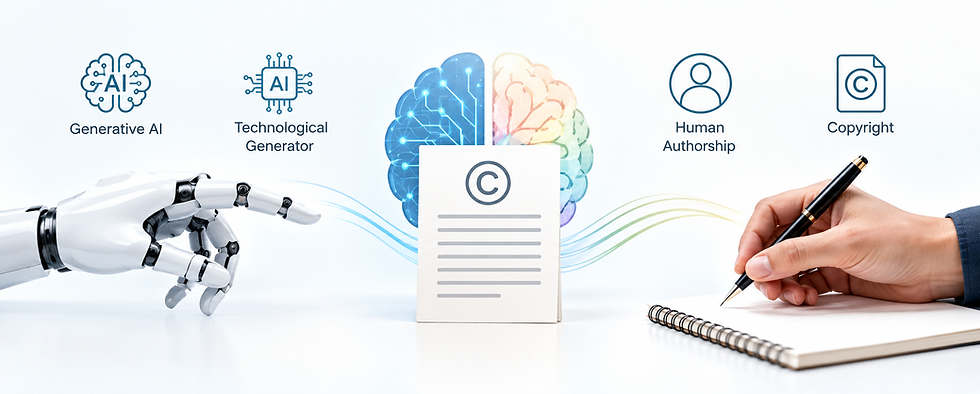
Introduction : The rapid growth of generative artificial intelligence (“AI”) has raised an important copyright question: can copyrighted works be used for training AI models without obtaining permission from their owners?
The Delhi High Court recently dealt with this issue in ANI Media Pvt. Ltd. v. Open AI OpCo LLC. ANI alleged that OpenAI had used its copyrighted news content for training the Large Language Models (“LLMs”) underlying ChatGPT without authorisation. At the interim stage, the Court held, prima facie, that OpenAI’s storage of ANI’s original literary works for training the LLMs underlying ChatGPT fell within Section 52(1)(a) of the Copyright Act, 1957, and therefore did not amount to infringement under Section 51.
The decision is particularly significant for the Court’s interpretation of the term “research” under Section 52(1)(a)(i). Importantly, the Court viewed Section 52 not merely as a narrow exception to infringement, but as a provision recognising the rights and privileges of users, and therefore deserving a broad and liberal interpretation.
Can Training an AI Model Be ‘Research’?
The Copyright Act provides that fair dealing with a work for “private or personal use, including research” does not constitute copyright infringement. The difficulty before the Court was evident. When Section 52 was amended, the legislature could hardly have contemplated generative AI or the training of LLMs. The Court, therefore, had to decide whether “research” should remain confined to conventional human activity.
The Court observed that research is ordinarily an intermediate process undertaken before an eventual output is produced. Similarly, during LLM training, stored literary works are screened, organised and converted into machine-readable inputs. The data is then analysed iteratively to improve the model’s ability to generate outputs. On this basis, the Court held, prima facie, that LLM training could constitute 'research' under Section 52(1)(a)(i).
Significantly, the Court relied upon the doctrine of updating construction. Referring to State (Through CBI/New Delhi) v. S.J. Choudhary, it observed that an existing statute must sometimes be interpreted in light of subsequent developments in science and technology.
Accordingly, the Court held, prima facie, that research need not necessarily be confined to acts undertaken by human beings and could extend to machine learning undertaken at the behest of humans and for human benefit.
What About OpenAI’s Commercial Character?
Another important objection was that OpenAI operates commercially and, therefore, its use of copyrighted material should not qualify as private use or research. The Court did not accept commerciality as an automatic bar. It noted that Section 52(1)(a) does not expressly exclude commercial use, whereas certain other clauses of Section 52 specifically impose such restrictions. Activities such as research, review and reporting of current affairs may themselves be carried out commercially. However, this does not mean that commercial considerations are irrelevant altogether. The economic impact of the use may still be relevant while determining whether the dealing is “fair”.
However, merely satisfying the purpose of “research” was not sufficient. The Court adopted a two-stage inquiry under Section 52(1)(a): first, whether the use falls within one of the purposes specified in the provision, and second, whether the dealing itself is fair.
On the second requirement, the Court considered factors including the nature of OpenAI’s use, market substitution and public interest. It found that ANI had not produced sufficient material at this stage to establish loss of market share or reduction in subscription revenue because of OpenAI. It also emphasised the broader benefits of LLMs in areas such as education, scientific research, translation, accessibility and dissemination of information.
Does the Judgment Stretch Section 52 Too Far?
The Court’s approach is technologically progressive, but it also raises a difficult question.
If “research” includes machine learning undertaken by commercial AI developers, the scope of Section 52(1)(a)(i) becomes considerably wider. However, this interpretation invites closer scrutiny. Large-scale computational use of copyrighted material is qualitatively different from the conventional understanding of an individual using a work for research.
This is particularly significant because the Copyright Act does not contain a specific text and data mining exception for AI training.
The safeguard lies in the Court’s distinction between purpose and fairness. Calling AI training “research” does not automatically make every instance of AI training lawful. The manner and extent of the use, its commercial impact, and its effect on the copyright owner’s market may still influence whether the dealing is fair.
Conclusion
ANI v. OpenAI represents an important attempt to apply the Copyright Act to technology that its framers could not have anticipated. By using the doctrine of updating construction, the Delhi High Court has prima facie brought machine learning within the meaning of “research” under Section 52(1)(a)(i). The judgment, however, should not be read as granting a blanket fair dealing protection to AI training. Its more important contribution is the two-stage approach: AI training may qualify as research, but the dealing must independently be fair. The findings remain prima facie and were made while deciding the application for interim injunction. The larger question of where copyright protection ends and permissible AI training begins is, therefore, far from settled.
Author: Thanush S. in case of any queries please contact/write back to us via email to content@khuranaandkhurana.com or at Khurana & Khurana, Advocates and IP Attorney


Comments